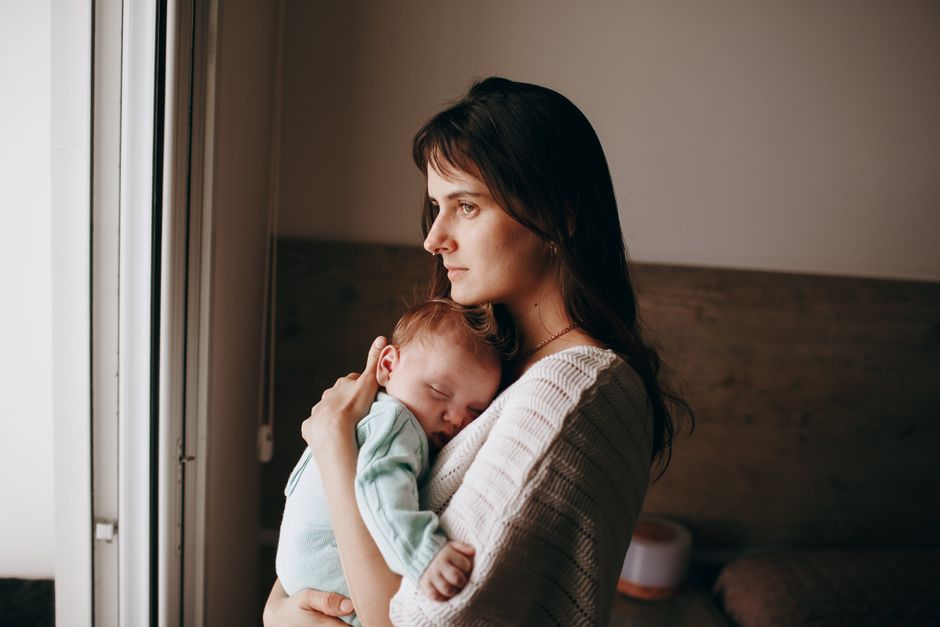
What to Say to a New Mom
Last Updated: July 15, 2026 · Rachel, Founder of Mother Muna
You want to say the right thing. You're standing in her kitchen, or typing a text, or holding a casserole, and what comes out is "congratulations" — because that is what you're supposed to say, and because the alternative is standing there saying nothing.
Congratulations isn't wrong. It's just aimed at the baby. And the person in front of you is not the baby.
Here is what to say instead.
Say something about her
Almost every visitor, card, and comment in the first weeks is about the baby: how big, how alert, whose nose. It's lovely. It's also relentless, and it can leave a woman feeling like the packaging her child arrived in.
Say the thing nobody else is saying:
- "How are you doing? Not the baby — you."
- "You look like you're doing this really well."
- "That was a big thing your body just did."
- "I've been thinking about you all week."
Then let there be a pause. The pause is where the real answer lives.
Never say "let me know if you need anything"
Everyone says it. Everyone means it. It almost never produces help.
Because it hands her a job: work out what she needs, decide whether it's worth troubling you, find the words, and ask a favor while feeling like a burden. Nobody does that at 4am on three hours of sleep.
Make the offer specific and easy to accept:
- "I'm at the store — what's on your list?"
- "I'm dropping food on your porch Thursday. You don't have to see me or talk to me."
- "Can I take the baby for an hour so you can sleep?"
- "I'm free Tuesday morning. Want me to come do your laundry?"
The rule of thumb: make it a yes-or-no question, not an essay question.
What to say when she says it's hard
This is the moment that matters, and it's the one most people fumble — usually by trying to fix it, or by rushing to the silver lining.
Resist. "At least he's healthy" ends the conversation. "It goes so fast" is true and completely useless at 4am. "Have you tried…" turns her confession into a problem to be solved, and quietly implies she hadn't thought of it.
What works is smaller than you think:
- "That sounds really hard."
- "You're not doing anything wrong."
- "I'm not going anywhere."
- "Do you want me to help, or do you want me to just listen?"
That last one is worth memorizing. It's the difference between being useful and being one more thing to manage.
What not to say
Not because these are cruel — most are meant kindly — but because of what they land as:
- "Sleep when the baby sleeps." Lands as: you're doing this wrong. Also ignores that the dishes, the laundry, and the older child do not sleep when the baby sleeps.
- "Enjoy every moment." Lands as: you're not allowed to find any of this difficult.
- "Is he a good baby?" Lands as: babies can be bad, and yours might be, and it might be your fault.
- "Are you breastfeeding?" Lands as a test — one she may be failing, grieving, or fighting through in silence.
- "You look great!" Well-meant. But it makes her body the topic, and right now her body is a site of recovery, not a compliment.
- "When are you having another?" She is holding a two-week-old.
What to say if you're worried about her
Postpartum depression and anxiety are common and treatable, and the people around a new mother usually notice before she names it. Shame keeps her quiet — she is supposed to be happy, and she isn't, and she thinks that means she's broken.
You don't need clinical language. You need a door:
- "You seem like you're carrying a lot. How are you really?"
- "This doesn't sound like the tiredness. Have you talked to anyone?"
- "I can watch the baby while you go. I'll drive you."
Then be completely ordinary about it. If she does get help, the most supportive thing you can do is treat it like any other doctor's appointment — because it is one.
If you say nothing else, say this
Six words: "You're a good mom. I'm here."
She may not answer. She may cry. She may say it back weeks later when she can finally hear it.
New mothers are surrounded by people who came for the baby. Be the one who came for her.
Originally published July 15, 2026. Updated July 15, 2026.